

Armada de Rusia
-
__DiaMoND__

- Coronel

- Mensajes: 3820
- Registrado: 25 Dic 2008, 07:31

-
ATLANTA
- General de Brigada

- Mensajes: 4731
- Registrado: 25 Ago 2007, 09:46
- Ubicación: Talcahuano
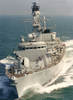
Si lo comparas con la nave gemela a su costado, se ve claramente que el buque quedó inutilizado, la superstructura de proa, con el puente de mando y palo mayor incluido, colapso por su peso, en las fotografias se aprecia también que hubo una explosión por la gran cantidad de esquirlas incrustadas en el buque, también al igual que Badghost creo que el pozo del montaje AK-630, SS.BB. inlcuída estallo causando el incendio que finalmente debe haber hecho sucumbir la superestructura.
Ahora también veo díficil que la nave haya arribado a puerto por sus propios medios, se aprecia mucho daño y debemos deducir que el interior no esta mejor que el holocausto que hay afuera.
Al parecer este es el Montaje en comento,

saludos
ATLANTA
Ahora también veo díficil que la nave haya arribado a puerto por sus propios medios, se aprecia mucho daño y debemos deducir que el interior no esta mejor que el holocausto que hay afuera.
Al parecer este es el Montaje en comento,

saludos
ATLANTA
\\\\\\\"Mientras más sudor derrames en la paz, menos sangre derramaras en la guerra\\\\\\\\"
-
ATLANTA
- General de Brigada
- Mensajes: 4731
- Registrado: 25 Ago 2007, 09:46
- Ubicación: Talcahuano
Si lo comparas con la nave gemela a su costado, se ve claramente que el buque quedó inutilizado, la superstructura de proa, con el puente de mando y palo mayor incluido, colapso por su peso, en las fotografias se aprecia también que hubo una explosión por la gran cantidad de esquirlas incrustadas en el buque, también al igual que Badghost creo que el pozo del montaje AK-630, SS.BB. inlcuída estallo causando el incendio que finalmente debe haber hecho sucumbir la superestructura.
Ahora también veo díficil que la nave haya arribado a puerto por sus propios medios, se aprecia mucho daño y debemos deducir que el interior no esta mejor que el holocausto que hay afuera.
Al parecer este es el Montaje en comento,
saludos
ATLANTA
Ahora también veo díficil que la nave haya arribado a puerto por sus propios medios, se aprecia mucho daño y debemos deducir que el interior no esta mejor que el holocausto que hay afuera.
Al parecer este es el Montaje en comento,
saludos
ATLANTA
\\\\\\\"Mientras más sudor derrames en la paz, menos sangre derramaras en la guerra\\\\\\\\"
-
Gobo

- Soldado

- Mensajes: 39
- Registrado: 25 Oct 2009, 20:00
Bogdan-The-Kozak escribió:Estas fotos de cuando son?
Podria ser el incidente de hace unas semanas con el Moskva?
Pero no se como ese buque puede ser el Moskvá...
07.02.2007 МПК"Башкортостан"
07.02.2007 Sobre la base naval Baltiysk a bordo de МПК "Bashrkortostán" ha pasado el incendio y la explosión
http://www.morflot.su/view_news.php?id=113
-
Bogdan-The-Kozak
- Comandante

- Mensajes: 1631
- Registrado: 03 Oct 2008, 23:48
- Ubicación: Ucrania
Gobo escribió:Bogdan-The-Kozak escribió:Estas fotos de cuando son?
Podria ser el incidente de hace unas semanas con el Moskva?
Pero no se como ese buque puede ser el Moskvá...
07.02.2007 МПК"Башкортостан"
07.02.2007 Sobre la base naval Baltiysk a bordo de МПК "Bashrkortostán" ha pasado el incendio y la explosión
http://www.morflot.su/view_news.php?id=113
De hace 2 años...?? Iris pfff posteando noticias viejas... :p
http://images.google.com.ua/images?hl=u ... a=N&tab=wi
"A los esclavos, no los dejan ir al Cielo". Ivan Sirkó.
-
depreyautja
- Sargento Segundo

- Mensajes: 361
- Registrado: 01 Oct 2009, 21:38
- Ubicación: mexico
el torpedo ruso de supercavitacion es el equivalente a un cohete no guiado de un helicoptero apache,es decir: es rapido y efectivo pero no "inteligente",fue diseñado como un arma de "pega y corre", en mi opinion el mejor torpedo que existe es el MK-48 ADCAP mod6,porcierto sobre el "pez" ruso,les dejo un video de la armada irani en donde se ve un torpedo que fue disparado de un buque hacia un submarino inerte,supuestamente con resultado exitoso.el ejercicio fue el año pasado. http://www.youtube.com/watch?v=yOR3uKD-eMU
-
Bogdan-The-Kozak
- Comandante
- Mensajes: 1631
- Registrado: 03 Oct 2008, 23:48
- Ubicación: Ucrania
-
Gobo
- Soldado
- Mensajes: 39
- Registrado: 25 Oct 2009, 20:00
El 11 de noviembre de 2009 К-18 ("Carelia") del proyecto 667БДРМ (la cifra - "el Delfín"), por la clasificación de la OTAN - "Delta-4" ha salido a las pruebas de fábrica demandadas.
http://www.setcorp.ru/main/pressrelease ... ge=russian
http://www.setcorp.ru/main/pressrelease ... ge=russian

-
Yorktown

- General

- Mensajes: 15499
- Registrado: 23 Oct 2007, 11:22
Sobre el Bulava...
Russia Builds A Loser
by James Dunnigan
November 19, 2009
Russian defense officials announced that the failed Bulava ballistic missile test last July, was due to a defect in the first stage steering system. This was fixed, and another test will take place before the end of the month. So far, the Bulava has been test fired eleven times. Only one of those tests was an unqualified success, and six were absolute failures. But the Russian government insists that development will continue, and succeed. The inept development of the new Bulava SLBM (Sea Launched Ballistic Missile) for the new Boeri class SSBN (nuclear submarine carrying SLBMs) has become a growing scandal within the Russian defense bureaucracy.
A few months ago, the developers of the Bulava were told that they had until the end of the year to make the missile work. Otherwise, the project would be cancelled, heads would roll (OK, people would be fired) and the older R-29RM Sineva SLBM would replace the Bulava. It's already been suggested that the 40 ton R-29RM be used in the new Borei SSBNs. Sineva is the last liquid fuel Russian SLBM in service, and is used in the current Delta class SSBNs.
Apparently the accountants caught wind of this and told the bosses how much such a switch would cost (we're talking several billion dollars, at least). So now, the final decision (for the moment) is that Bulava will be made to work, no matter what it takes. Moreover, an investigative committee determined that most of the problems have been due to sloppy manufacturing. It was suggested that construction of the Bulavas be moved to another factory. This also proved to be financially, and technically, impossible. Several senior development officials have already been fired.
For a while, switching to the older, but more reliable, Sineva missiles looked like a reasonable move. Liquid fuel missiles are more complex than solid fuel missiles, even though they use fuel that can be stored for long periods inside the missile. Unable, for a long time, to develop the technology for solid fuel rockets, Russia made the most of this, and developed some very effective "storable liquid fuel" rockets. It was only near the end of the Cold War that Russia finally mastered the solid fuel rocket construction techniques. But only one solid fuel SLBM entered service, the huge, 90 ton R-39, for the massive Typhoon SSBNs (which are being retired because they were so expensive to operate.)
Many Russian officials believed that the root of all these problems was the flight of so many skilled engineers and scientists from Russian defense industries after the Soviet Union collapsed (and sales promptly dropped over 90 percent). The smart people quickly found lucrative jobs in other industries, and there has been little new blood in the last two decades. The same thing happened on the manufacturing end. During the Soviet period, defense industries had the cash to attract the most skilled manufacturing staff. No more. And the dismal Bulava test performance is yet another result of this brain drain. But it was also noted that some defense plants were better at attracting, and retaining, more capable production people. Thus the move to another factory.
Russian doubts about Bulava are consistent with long time problems with their submarine launched ballistic missiles. These problems were largely kept secret during the Cold War, but since then, more information has emerged. Apparently the Russians want to get a few working Bulavas to sea in the first of their new Borei class boats, that was recently commissioned. This looks unlikely, given the failure of the most recent test, and the pattern of failed tests before it.
One Borei boat is already in service, and it's missile tubes are designed to hold the Bulava (which is 12.1 meters long and two meters in diameter.) The likely replacement, the Sineva, is 14.8 meters long and 1.8 meters in diameter. The additional length will require substantial revisions in the existing Borei, and the two under construction. The existing solid fuel SLBM that works, and is carried in the larger (and being retired as too expensive to operate) Typhoon, is the R-39, and it is huge (16 meters long and 2.4 meters in diameter.) Much too large even for a rebuilt Borei.
As some Russians expected, the final (for now) decision was to just bull ahead, declare the Bulava ready for service and install them. As absurd as that sounds, some of the 16 Bulavas on each Borei will work. And with continued development, the percentage that will work will climb from about 40 percent, to something more respectable (like 70 or 80 percent.) That will take time, and all the Russians have to do in the meantime is avoid a nuclear war.
Me encanta el final.
Russia Builds A Loser
by James Dunnigan
November 19, 2009
Russian defense officials announced that the failed Bulava ballistic missile test last July, was due to a defect in the first stage steering system. This was fixed, and another test will take place before the end of the month. So far, the Bulava has been test fired eleven times. Only one of those tests was an unqualified success, and six were absolute failures. But the Russian government insists that development will continue, and succeed. The inept development of the new Bulava SLBM (Sea Launched Ballistic Missile) for the new Boeri class SSBN (nuclear submarine carrying SLBMs) has become a growing scandal within the Russian defense bureaucracy.
A few months ago, the developers of the Bulava were told that they had until the end of the year to make the missile work. Otherwise, the project would be cancelled, heads would roll (OK, people would be fired) and the older R-29RM Sineva SLBM would replace the Bulava. It's already been suggested that the 40 ton R-29RM be used in the new Borei SSBNs. Sineva is the last liquid fuel Russian SLBM in service, and is used in the current Delta class SSBNs.
Apparently the accountants caught wind of this and told the bosses how much such a switch would cost (we're talking several billion dollars, at least). So now, the final decision (for the moment) is that Bulava will be made to work, no matter what it takes. Moreover, an investigative committee determined that most of the problems have been due to sloppy manufacturing. It was suggested that construction of the Bulavas be moved to another factory. This also proved to be financially, and technically, impossible. Several senior development officials have already been fired.
For a while, switching to the older, but more reliable, Sineva missiles looked like a reasonable move. Liquid fuel missiles are more complex than solid fuel missiles, even though they use fuel that can be stored for long periods inside the missile. Unable, for a long time, to develop the technology for solid fuel rockets, Russia made the most of this, and developed some very effective "storable liquid fuel" rockets. It was only near the end of the Cold War that Russia finally mastered the solid fuel rocket construction techniques. But only one solid fuel SLBM entered service, the huge, 90 ton R-39, for the massive Typhoon SSBNs (which are being retired because they were so expensive to operate.)
Many Russian officials believed that the root of all these problems was the flight of so many skilled engineers and scientists from Russian defense industries after the Soviet Union collapsed (and sales promptly dropped over 90 percent). The smart people quickly found lucrative jobs in other industries, and there has been little new blood in the last two decades. The same thing happened on the manufacturing end. During the Soviet period, defense industries had the cash to attract the most skilled manufacturing staff. No more. And the dismal Bulava test performance is yet another result of this brain drain. But it was also noted that some defense plants were better at attracting, and retaining, more capable production people. Thus the move to another factory.
Russian doubts about Bulava are consistent with long time problems with their submarine launched ballistic missiles. These problems were largely kept secret during the Cold War, but since then, more information has emerged. Apparently the Russians want to get a few working Bulavas to sea in the first of their new Borei class boats, that was recently commissioned. This looks unlikely, given the failure of the most recent test, and the pattern of failed tests before it.
One Borei boat is already in service, and it's missile tubes are designed to hold the Bulava (which is 12.1 meters long and two meters in diameter.) The likely replacement, the Sineva, is 14.8 meters long and 1.8 meters in diameter. The additional length will require substantial revisions in the existing Borei, and the two under construction. The existing solid fuel SLBM that works, and is carried in the larger (and being retired as too expensive to operate) Typhoon, is the R-39, and it is huge (16 meters long and 2.4 meters in diameter.) Much too large even for a rebuilt Borei.
As some Russians expected, the final (for now) decision was to just bull ahead, declare the Bulava ready for service and install them. As absurd as that sounds, some of the 16 Bulavas on each Borei will work. And with continued development, the percentage that will work will climb from about 40 percent, to something more respectable (like 70 or 80 percent.) That will take time, and all the Russians have to do in the meantime is avoid a nuclear war.
Me encanta el final.
We, the people...
¡Sois todos un puñado de socialistas!. (Von Mises)
¡Sois todos un puñado de socialistas!. (Von Mises)
-
JoeLewis
- Teniente Coronel

- Mensajes: 2499
- Registrado: 27 Oct 2008, 15:15
Como si fuera el único ICBM que ha tenido un parto difícil:
http://books.google.es/books?id=8wUAAAA ... q=&f=false
"Nuestro" Trident II también dio quebraderos de cabeza.
http://books.google.es/books?id=8wUAAAA ... q=&f=false
"Nuestro" Trident II también dio quebraderos de cabeza.


-
Yorktown
- General
- Mensajes: 15499
- Registrado: 23 Oct 2007, 11:22
World Briefing | Europe
Russia: 8 Die in Blast at Weapons Depot
An explosion at a navy weapons depot killed at least eight soldiers and injured several others on Monday, less than two weeks after a similar blast at the same depot killed two and forced the evacuation of thousands. The explosion in the Ulyanovsk region in central Russia occurred while soldiers were disposing of unexploded munitions left over from the first explosion on Nov. 13, a Defense Ministry spokesman said on Russian television.
http://www.nytimes.com/2009/11/24/world ... ref=europe
Mis condolencias.
Diez hombres en menos de quince días, diez hombres en quince días, ocho arreglando el primer estropicio.
Saludos.
Russia: 8 Die in Blast at Weapons Depot
An explosion at a navy weapons depot killed at least eight soldiers and injured several others on Monday, less than two weeks after a similar blast at the same depot killed two and forced the evacuation of thousands. The explosion in the Ulyanovsk region in central Russia occurred while soldiers were disposing of unexploded munitions left over from the first explosion on Nov. 13, a Defense Ministry spokesman said on Russian television.
http://www.nytimes.com/2009/11/24/world ... ref=europe
Mis condolencias.
Diez hombres en menos de quince días, diez hombres en quince días, ocho arreglando el primer estropicio.
Saludos.
We, the people...
¡Sois todos un puñado de socialistas!. (Von Mises)
¡Sois todos un puñado de socialistas!. (Von Mises)
-
evguenni
- Sargento

- Mensajes: 219
- Registrado: 05 Nov 2008, 18:57
CONSTRUCCIÓN DE FRAGATAS PROJ.22350
http://sp.rian.ru/onlinenews/20091126/124129355.html
La empresa "Astilleros del Norte" comienza a fabricar en serie las fragatas proyecto 22350 para la Armada rusa, informaron hoy fuentes de la Marina de Guerra.
"En la empresa ‘Astilleros del Norte', ubicada en San Petersburgo, se celebrará este jueves el acto de puesta de quilla de la fragata proyecto 22350 que se fabricará en serie para la Armada rusa", precisaron las fuentes y agregaron que el navío fue bautizado como "Almirante Kasatonov".
Las fuentes recordaron que la fragata piloto de este proyecto, el "Almirante Gorshkov", comenzó a construirse en la empresa mencionada en 2006.
Los buques del nuevo proyecto, diseñados para cumplir misiones de corta y larga duración en mares y océanos, están provistos de los sistemas de misiles y de artillería más modernos y pueden llevar helicópteros a bordo.
Las fragatas proyecto 22350 tienen el desplazamiento de unas 4.500 toneladas, miden más de 130 metros de eslora y más de 16 metros de manga y pueden cubrir más de 4.000 millas.
http://sp.rian.ru/onlinenews/20091126/124129355.html
¡No merece vivir quien por un noble ideal no está dispuesto a morir!
¿Quién está conectado?
Usuarios navegando por este Foro: ClaudeBot [Bot] y 10 invitados