

Sistemas que la misma USAF admite no sobrevivirían el primer día en un ambiente A2/AD. Lo que tiene valor no es que puedan tener 60 puntos vigilados en cualquier momento, particularmente con esos drones. Es lo que se aprende en términos de organización, operacionalización de conceptos y en tener personal entrenado y una estructura de comando.faust escribió:resumen en un párrafo el significado de poderío aéreo:
"The USAF now operates 60 continuous surveillance orbits with the MQ-9 and MQ-1 Predator, which requires a cadre of about 1,000 pilots and 1,000 sensor operators."
Lt Gen Robert Otto, air force’s deputy chief of staff for intelligence, surveillance and reconnaissance (ISR)
https://www.flightglobal.com/news/artic ... kp-418317/
Fuerza Aérea de Estados Unidos
-
Mauricio

- Mariscal de Campo

- Mensajes: 25749
- Registrado: 21 Feb 2003, 20:39
Fuerza Aérea de los Estados Unidos
Imperialista entregado a las Fuerzas Capitalistas del Mal
-
Ildefonso Machuca

- Comandante

- Mensajes: 1570
- Registrado: 17 Jun 2014, 19:37
Fuerza Aérea de los Estados Unidos
una presentacion de la familia de helos BELL UH-1Y y AH-1Z
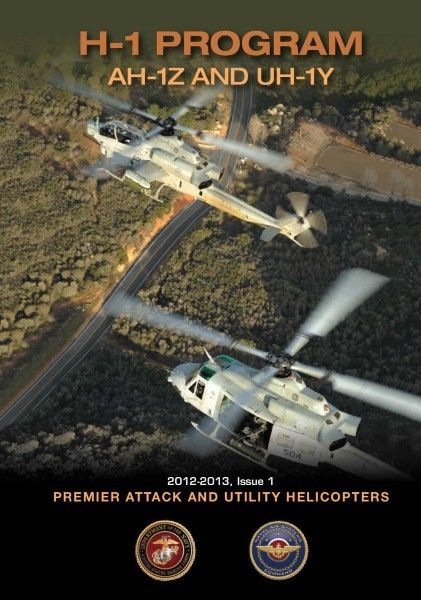
bajar el PDF... http://adf.ly/1UWRpC
que lo disfruten
agur
bajar el PDF... http://adf.ly/1UWRpC
que lo disfruten
agur
No pierdas el tiempo dando tantas explicaciones, tus amigos no las necesitan, tus enemigos no las quieren creer y los estúpidos no las van a entender
-
Zabopi

- General de Cuerpo de Ejército

- Mensajes: 8613
- Registrado: 24 May 2011, 23:17
- Ubicación: Ya ni me acuerdo

Fuerza Aérea de los Estados Unidos
¡Hola!
Un interesante informe sobre la edad y la operatividad de los aparatos de combate de la USAF.
http://www.airforcetimes.com/story/mili ... /78860920/
Observar la elevada operatividad de las versiones armadas del C-130 y que al V-22 le pasa algo.
Un interesante informe sobre la edad y la operatividad de los aparatos de combate de la USAF.
http://www.airforcetimes.com/story/mili ... /78860920/
Observar la elevada operatividad de las versiones armadas del C-130 y que al V-22 le pasa algo.
-
reytuerto

- Mariscal de Campo
- Mensajes: 19724
- Registrado: 12 Ene 2003, 18:23
- Ubicación: Caracas, Venezuela

Fuerza Aérea de los Estados Unidos
Estimado Zabopi:
Al Osprey le pasa algo desde antes de su nacimiento. Sin negar que es un logro tecnologico remarcable, pero plagado de problemas, de baja disponibilidad y de necesario costo elevado. Saludos cordiales.
Al Osprey le pasa algo desde antes de su nacimiento. Sin negar que es un logro tecnologico remarcable, pero plagado de problemas, de baja disponibilidad y de necesario costo elevado. Saludos cordiales.
La verdad nos hara libres

-
Experten
- Teniente Coronel

- Mensajes: 2463
- Registrado: 18 Abr 2010, 00:12
Fuerza Aérea de los Estados Unidos
Sin olvidar las altísimas temperaturas en las que opera en comparación a un helo y que ya han comenzado a limitar sus capacidades operativas. No me malentiendan, creo que es un experimento interesante que presenta retos técnicos muy buenos y que creo que tienen mucho potencial, pero que en definitiva se están presentando.
Creo que hay mucho futuro en este tipo de aparatos pero quizá valga la pena comenzar a enfrentar sus mayores desventajas técnicas.
Creo que hay mucho futuro en este tipo de aparatos pero quizá valga la pena comenzar a enfrentar sus mayores desventajas técnicas.
Jagdgeschwader 74 "Viva Zapata" SQdr.
-
troop2020
- Teniente Primero

- Mensajes: 1058
- Registrado: 20 Jul 2014, 14:03
Fuerza Aérea de los Estados Unidos
Saludos a todos ... Los costos del programa son enormes 54.83 billion por 460 aparatos es una barbaridad ...Los japoneses compraron 17 por 3 billion demasiado dinero para solo 17 aparatos , el army no lo quiere por los costos operativos , el osprey es un aparato muy Bueno pero los costos no compensan lo invertido , en afganistan habian logrado mejor disponibilidad pero no recuerdo los %
The Bell-Boeing V-22 Osprey is a multi-role combat and transport aircraft utilizing tilt-rotor technology to combine the vertical performance of a helicopter with the speed and range of a fixed-wing turboprop aircraft. With its engine nacelles and rotors in vertical position, the V-22 Osprey can take off, land and hover like a helicopter. When airborne, the engine nacelles can be rotated, thus converting the V-22 to a turboprop fixed-wing aircraft capable of high-speed and high-altitude flight. This unique feature allows the Osprey to fill an operational niche.
The V-22 Osprey is powered by two Rolls-Royce T406/AE 1107C-Liberty turboshaft engines, each rated at 6,150 shp. The V-22 has graphite/fiberglass rotor blades and a composite/metal airframe. By structural weight, the V-22 is 40% composite.
The V-22 can carry 24 combat troops, or up to 20,000 pounds (9,070 kg) of internal cargo or 15,000 pounds (6,800 kg) of external cargo. For ease-of-transport, the rotors fold and the wing rotates to minimize the space needed for storage. The Osprey is designed to fly 2,100 miles with one in-flight refueling, thus providing the advantage of a vertical and/or short takeoff and landing (V/STOL) aircraft that can rapidly self-deploy to any location in the world.
The Osprey comes in two main variants. The MV-22 is designed to meet the amphibious/vertical assault needs of the U.S. Marine Corps (USMC), the strike rescue needs of the U.S. Navy and long-range special operations forces (SOF). The CV-22 is designed to support missions of the U.S. Special Operations Command (USSOCOM). The USMC plans to purchase 408 MV-22s to perform combat assault and assault support missions. USSOCOM has a requirement for 50 CV-22s configured for terrain-following, low-level, high-speed flight for long range special operations. As of June 2012, more than 165 V-22 Ospreys were in operation with ten Marine Corps and two Air Force Special Operations Command (AFSOC) squadrons. As of September 30, 2014, there were 226 MV-22s and 38 CV-22s in service.
The V-22 originates from the U.S. Department of Defense (DoD) Joint-service Vertical take-off/landing Experimental (JVX) aircraft program launched in 1981. The Bell Helicopter-Boeing team was awarded a development contract in 1983. The JVX aircraft was designated V-22 Osprey in January 1985. The V-22 first flew on March 19, 1989; however, the complexity and difficulties of designing the Osprey led to many years of testing and developing the aircraft. From October 1992 until April 1993, Bell and Boeing redesigned the V-22 to reduce aircraft weight, simplify production and reduce manufacturing costs. The redesigned version became the V-22B model and flight tests resumed in June 1993. Development continued for years and was dogged by accidents and high costs. The DoD approved the V-22 Osprey for full-rate production on September 28, 2005. The USMC commenced crew training for the MV-22B in 2000 and fielded the aircraft in 2007. Together with the MH-60R Seahawk, the Osprey will eventually replace the Marine Corp's aging CH-46/HH-46 Sea Knight. The CV-22B was deployed in March 2006 and achieved Initial Operational Capability (IOC) in March 2009. The CV-22 replaced the MH-53 Pave Low, which was retired in September 2008.
In the production of the V-22 Osprey, Boeing Military Aircraft's Mobility Division is responsible for the fuselage, empennage, and all subsystems, digital avionics, and fly-by-wire flight-control systems. Bell Helicopter Textron provides the wing, transmissions, rotor systems, engine installation, and final assembly at its facility in Amarillo, Texas. MV-22B Block B and CV-22 Block 10 have the same propulsion system and share a 90% common airframe. The main differences are in the avionics systems.
Major V-22 subcontractors include BAE Systems (flight control system); General Dynamics (mission computer); Honeywell (Environmental Control System (ECS) and components, LWINS, VF generator, CDS, FDP, TCAS, SDC, IR suppressor, heat exchanger); Exelis (AN/ALQ-211(V)2 Countermeasures Set - CV-22 unique); Northrop Grumman (AN/AAQ-24(V) Directional Infrared Countermeasure (DIRCM) system - CV-22 Only; AN/APR-39D(V)2 Radar Warning Receiver (RWR) - MV-22 only); Raytheon (AN/AAQ-27A forward-looking infrared (FLIR) system - MV-22 only, MMR, AN/ASN-163 MAGR, mission planning, and maintenance system); Orbital ATK (AN/AAR-47 Missile Warning System); BAE Systems (AN/ALE-47 Countermeasure Dispenser System and AN/APX-123 Identification Friend or Foe (IFF) System); Rockwell Collins AN/ARN-147(V) VOR/ILS/GS/MB Receiver and AN/ARN-153 Tactical Airborne Navigation (TACAN) System); Rolls-Royce (T406/AE 1107 Engines); Moog (flight control actuators and vibration suppression actuators); Triumph Group-Vought Aircraft (empennage and fiber placement skins); and Elbit Systems (AN/AVS-7 ANVIS/HUD (Aviator's Night Vision System/Head-Up Display) system - MV-22 only).
In February 2011, the worldwide Osprey fleet surpassed the 100,000 total flight operating hour mark. With more than 250 V-22 Ospreys currently in service by the end of September 2014, the fleet has amassed more than 200,000 flying hours.
In April 2013, it was announced that Israel would become the first foreign operator of the V-22. However, in November 2014, Israel decided to cancel its planned purchase of six V-22s due to budgetary constraints. On November 21, 2014, Japan's defense ministry announced that it plans to buy the Osprey. Japan is reportedly interested in buying 20-40 aircraft. On May 5, 2015, the State Department approved a possible Foreign Military Sale (FMS) to Japan for 17 V-22B Block C Osprey aircraft and associated equipment, parts and logistical support at an estimated cost of $3 billion.
On June 13, 2013, Bell-Boeing announced it had been awarded a five-year contract valued at $6.5 billion for the production of 99 V-22s (92 MV-22 models and 7 CV-22 models).
The Navy plans to phase out its aging fleet of 35 Northrop Grumman C-2A Greyhounds in favor of the MV-22 for carrier onboard delivery (COD) missions. The COD mission involves the transportation of passengers and cargo to/from aircraft carriers. The Navy has decided to buy four tiltrotors annually from fiscal year 2018 to 2020.
Armament/Weapons: The V-22 Osprey can be equipped with a 7.62 mm M240 machine gun or a .50 caliber (12.7 mm) M2 Browning machine gun. Survivability issues in high-threat situations have created a need for better armament. Currently, CV-22 and MV-22 Ospreys are being retrofitted with the Interim Defensive Weapon System (IDWS) belly turret from BAE Systems housing a 3-barrel 7.62mm GAU-17 minigun.
Price/Unit Cost: In FY 2014 (last year of CV-22 procurement), the unit cost of the CV-22 was $69.22 million (flyaway cost). The airframe had a cost of $61.31 million and the cost of the two AE1107C engines was $4.50 million ($2.25 million each).
In FY 2015, the unit cost of the MV-22 is $71.92 million (flyaway cost). The airframe costs $64.25 million, electronics $1.38 million, and the two AE1107C engines cost $4.62 million ($2.31 million each).
Total Cost - Life of Program (LoP): The procurement cost of the V-22 program is $44.31 billion (estimated by the DoD) + $10.52 billion in research and development (RDT&E) funds, which means the total estimated program cost is $54.83 billion (numbers are aggregated annual funds spent over the life of the program and no price/inflation adjustment was made). This figure excludes military construction (MILCON) costs in support of the program in the amount of $111.8 million.
Mission/Role: The Navy/Marine Corps MV–22 performs combat assault and assault support missions, while the USSOCOM CV-22 is configured for terrain-following, low-level, high-speed flight for long range special operations.
FY 2015 DoD Program: Supports procurement of 19 MV-22 aircraft for the Navy/Marine Corps. The request is based on the third year of a follow-on 5-year multiyear procurement contract for FYs 2013 to 2017. FY 2014 was the last year of procurement for the Air Force-SOCOM CV-22. FY15 procurement funds in the amount of $1,787.2M have been provided the V-22 Program.
FY 2016 DoD Program: Supports procurement of 19 MV-22 aircraft for the Navy/Marine Corps. The request is based on the third year of a follow-on 5-year multiyear procurement contract for FYs 2013 to 2017. FY16 procurement funds in the amount of $1,690.7M have been provided the V-22 Program.
For more information, click to see the USAF FY 2016 CV-22 Budget and the Navy FY 2016 MV-22 Budget.
Sources: U.S. Department of Defense (DoD), Bell Helicopter, The Boeing Company,
Raytheon, and Rolls-Royce plc.
Specifications Armament DoD Spending FY2016 Budget
Boeing's V-22 Osprey Site: V-22 Osprey
Bell Helicopter's V-22 Osprey Site: V-22 Osprey
Rolls-Royce: T-406/AE 1107C Liberty Engine
Raytheon: AAQ-27A MWIR imaging system for MV-22
Total V-22 Program Cost:
$54.83 billion ($44.31B procurement + $10.52B RDT&E)
V-22 Procurement Objective:
460 aircraft (408x MV-22 & 50x CV-22 + 2 dev. aircraft)
V-22 Osprey Defense Budget Charts:
DoD Spending on the V-22 Osprey in FY 2012, FY 2013, FY 2014, FY 2015 and FY 2016
DoD Purchases of V-22 Osprey Aircraft in FY 2012, FY 2013, FY 2014, FY 2015 and FY 2016
Specifications
Aircraft Specifications: V-22 Osprey (CV-22 and MV-22)
Primary function: Airborne assault, vertical lift, combat search and rescue, and special operations
Prime Contractor: Bell Helicopter Textron and The Boeing Co.
Power Plant: 2x Rolls-Royce T406/AE1107C-Liberty turboshaft engines with 6,150 shp (each engine)
Wingspan: 84 ft 7 in (25.8 m)
Length: 57 ft 4 in (17.4 m)
Height: 22 ft 1 in (6.73 m)
Rotary Diameter: 38 ft (11.6 m)
Weight (Empty): 33,140 lb (15,032 kg)
Maximum Vertical Takeoff Weight: 52,600 lbs (23,860 kg)
Maximum Rolling Takeoff Weight: 60,500 lbs (27,443 kg)
Capacity: 24 troops (seated) / 12 litter patients / 32 troops (floor loaded) / 20,000 lbs (9,072 kg) internal cargo;
External Cargo: Single hook - 10,000 lbs (4,536 kg) of cargo; Dual hook - 15,000 lbs (6,804 kg) of cargo
Fuel Capacity: CV-22: 2,040 gallons (7,722 liters); MV-22: 1,448 gallons (5,481 liters) - figures are including aft sponson tank
Speed: Cruise: 241 kts/277 mph (446 km/h); Max: 275 kts/316 mph (509 km/h)
Rate of Climb: 2,320 ft/min (11.8 m/s)
Service Ceiling: 25,000 ft (7,620 m)
Range: 879 nm/1,012 miles (1,629 km)
Mission Radius: 430 nm/495 miles (796 km) for MV-22 with 24 troops and ramp mounted weapon system
Armament/Weapons: 1x 7.62 mm M240 machine gun or 1x .50 caliber (12.7 mm) M2 Browning machine gun
Currently, CV-22 and MV-22 Ospreys are being retrofitted with the Interim Defensive Weapon System (IDWS)
belly turret from BAE Systems housing a 3-barrel 7.62mm GAU-17 minigun.
Crew: Four (pilot, co-pilot and two enlisted flight engineers)
Price/Unit Cost:
CV-22: $69.22 million (in FY 2014)
MV-22: $71.92 million (in FY 2015)
First Flight: March 19, 1989
Deployed: CV-22: March 2006; Initial Operational Capability (IOC) in March 2007 (MV-22) / March 2009 (CV-22)
Inventory:
CV-22: 38 (as of September 2014) vs. 32 (as of September 2013)
MV-22: 226 (as of September 2014) vs. 192 (as of September 2013)
Avionics/Sensors/Countermeasures:
Exelis AN/ALQ-211(V)2 Countermeasures Set (CV-22 unique)
Northrop Grumman AN/AAQ-24(V) Directional Infrared Countermeasure (DIRCM) system (CV-22 unique)
Northrop Grumman AN/APR-39D(V)2 Radar Warning Receiver (RWR) (MV-22 unique)
Orbital ATK AN/AAR-47 Missile Warning System
Raytheon AN/AAQ-27A forward-looking infrared (FLIR) system (MV-22 unique)
Elbit Systems AN/AVS-7 ANVIS/HUD (Aviator's Night Vision System/Head-Up Display) System (MV-22 unique)
BAE Systems AN/ALE-47 Countermeasure Dispenser System
BAE Systems AN/APX-123 Identification Friend or Foe (IFF) System
Rockwell Collins AN/ARN-147(V) VOR/ILS/GS/MB Receiver
Rockwell Collins AN/ARN-153 Tactical Airborne Navigation (TACAN) System
AN/ASN-163 Miniature Airborne Global Positioning System Receivers (MAGR)
AN/APN-194 Radar Altimeter
-
FuturoMilitarEspanol
- Recluta

- Mensajes: 8
- Registrado: 09 Feb 2016, 22:25
- Ubicación: Las Palmas de Gran Canaria
Fuerza Aérea de los Estados Unidos
Editado:
Reproducción íntegra de la noticia de https://actualidad.rt.com/actualidad/19 ... yar-sesion
Mod.15
Reproducción íntegra de la noticia de https://actualidad.rt.com/actualidad/19 ... yar-sesion
Mod.15
-
Ildefonso Machuca
- Comandante
- Mensajes: 1570
- Registrado: 17 Jun 2014, 19:37
Fuerza Aérea de los Estados Unidos
me parece interesante poner este libro aqui...
Jane's F117

descargar PDF... http://adf.ly/1YTGND
agur
Jane's F117
descargar PDF... http://adf.ly/1YTGND
agur
No pierdas el tiempo dando tantas explicaciones, tus amigos no las necesitan, tus enemigos no las quieren creer y los estúpidos no las van a entender
-
Ildefonso Machuca
- Comandante
- Mensajes: 1570
- Registrado: 17 Jun 2014, 19:37
Fuerza Aérea de los Estados Unidos
hola RIO CAMPO...
enlace arreglado
descragar en ... http://adf.ly/1YTIN4
agur
enlace arreglado
descragar en ... http://adf.ly/1YTIN4
agur
rio-campo escribió:El enlace esta roto y no baja.Ildefonso Machuca escribió:una presentacion de la familia de helos BELL UH-1Y y AH-1Z
[ Imagen ]
bajar el PDF... http://adf.ly/1YTIN4
que lo disfruten
agur
No pierdas el tiempo dando tantas explicaciones, tus amigos no las necesitan, tus enemigos no las quieren creer y los estúpidos no las van a entender
-
Ildefonso Machuca
- Comandante
- Mensajes: 1570
- Registrado: 17 Jun 2014, 19:37
Fuerza Aérea de los Estados Unidos
una presentacion de la familia de helos BELL UH-1Y y AH-1Z
bajar el PDF... http://adf.ly/1YTIN4
que lo disfruten
agur
bajar el PDF... http://adf.ly/1YTIN4
que lo disfruten
agur
No pierdas el tiempo dando tantas explicaciones, tus amigos no las necesitan, tus enemigos no las quieren creer y los estúpidos no las van a entender
-
AFOCES
- General de Brigada

- Mensajes: 5938
- Registrado: 16 Dic 2006, 14:41
El avión arsenal.
Desde que se inventaron las armas arrojadizas, y después las de fuego, los soldados se han tenido que enfrentar con el mismo problema: demasiados enemigos, muy pocas balas...
La versión más reciente de este dilema se le presenta a la fuerza aérea estadounidense (USAF), que se enfrenta a potenciales enemigos tecnológicamente inferiores pero muy superiores en número. Y lo hace además con aviones que tienen limitada la munición que pueden acarrear. Para resolver este riesgo de desbordamiento de sus líneas defensivas, la USAF ha puesto en marcha un programa para crear un nuevo tipo de avión de combate: el avión arsenal. Un concepto que puede terminar poniendo a veteranos cazas como el F-15, bombarderos como el B-1 Lancer o incluso al venerable B-52 Stratofortress en misiones de superioridad aérea o soporte cercano a las tropas de tierra...
http://www.elconfidencial.com/tecnologi ... r_1173729/
Saludos.
La versión más reciente de este dilema se le presenta a la fuerza aérea estadounidense (USAF), que se enfrenta a potenciales enemigos tecnológicamente inferiores pero muy superiores en número. Y lo hace además con aviones que tienen limitada la munición que pueden acarrear. Para resolver este riesgo de desbordamiento de sus líneas defensivas, la USAF ha puesto en marcha un programa para crear un nuevo tipo de avión de combate: el avión arsenal. Un concepto que puede terminar poniendo a veteranos cazas como el F-15, bombarderos como el B-1 Lancer o incluso al venerable B-52 Stratofortress en misiones de superioridad aérea o soporte cercano a las tropas de tierra...
http://www.elconfidencial.com/tecnologi ... r_1173729/
Saludos.
-
Silver_Dragon
- General

- Mensajes: 19032
- Registrado: 18 Nov 2004, 22:00
Fuerza Aérea de los Estados Unidos
El diseño no es nada nuevo, la antigua propuesta del B-1R iba en ese mismo camino, no me extrañaria que saquen el concepto del baul de los recuerdos.
-
Bomber@
- Coronel

- Mensajes: 2958
- Registrado: 10 Abr 2010, 18:11
Fuerza Aérea de los Estados Unidos
El tema es que esos enemigos que podrían superar en número a los medios aéreos USA muy probablemente sean potencias nucleares, así que "no cuela" la necesidad de un "avión arsenal" para USA... y menos para "defensa" (a no ser que se considere aplicar eso de que "la mejor defensa es el ataque").
Para casi cualquier otro país que sea capaz de mantener una "red" en combate: pues sí me parece buena idea poder separar los sensores (que podrían ser los de un UAV -por ejemplo-) del aparato que realmente lance los misiles/señuelos/x (actuando de "camión de bombas")... pero sólo para una "parte de la flota" (la otra deberían ser cazabombarderos "tradicionales"... para los momentos en que "falle la red" o surja cualquier otro imprevisto, donde no haya que mirar tanto la eficiencia como la eficacia).
Para casi cualquier otro país que sea capaz de mantener una "red" en combate: pues sí me parece buena idea poder separar los sensores (que podrían ser los de un UAV -por ejemplo-) del aparato que realmente lance los misiles/señuelos/x (actuando de "camión de bombas")... pero sólo para una "parte de la flota" (la otra deberían ser cazabombarderos "tradicionales"... para los momentos en que "falle la red" o surja cualquier otro imprevisto, donde no haya que mirar tanto la eficiencia como la eficacia).
Lo bueno, si breve...mejor
-
Ildefonso Machuca
- Comandante
- Mensajes: 1570
- Registrado: 17 Jun 2014, 19:37
Fuerza Aérea de los Estados Unidos
bueno aunque son numeros del 2014... no dejan de ser muy interesantes...
Revista Flight
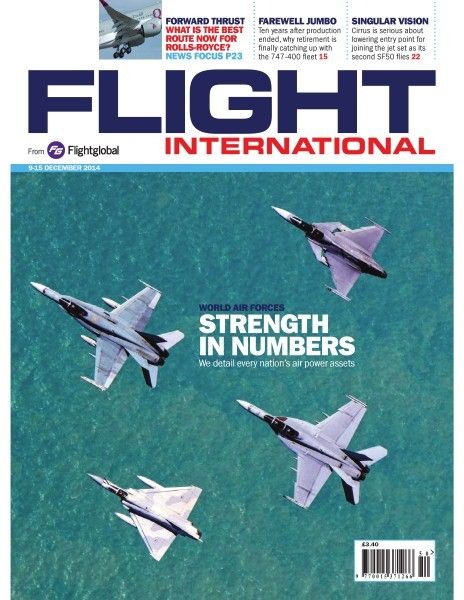
el PDF con el resumen.... http://adf.ly/1Z8kVl
y unas graficas...
por continentes...
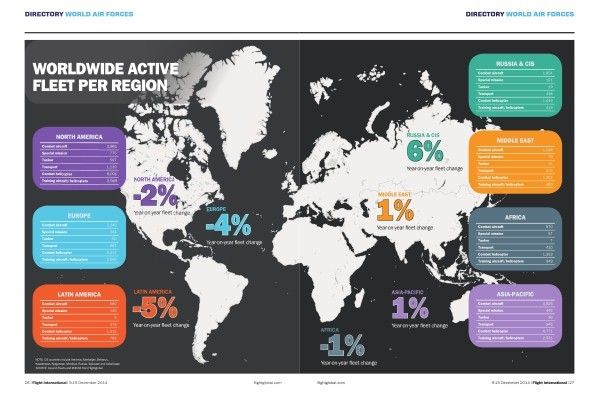
imagen en HiRez... http://adf.ly/1Z8l5q
los numeritos globales...
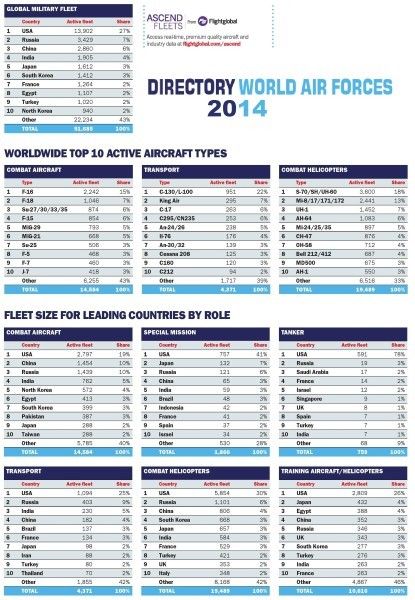
imagen en HiRez... http://adf.ly/1Z8lBF
y los numeritos de los EEUU
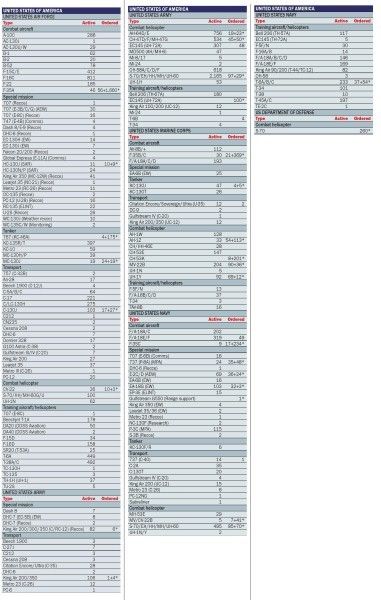
imagen en HiRez... http://adf.ly/1Z8luk
que lo disfruten...
agur
Revista Flight
el PDF con el resumen.... http://adf.ly/1Z8kVl
y unas graficas...
por continentes...
imagen en HiRez... http://adf.ly/1Z8l5q
los numeritos globales...
imagen en HiRez... http://adf.ly/1Z8lBF
y los numeritos de los EEUU
imagen en HiRez... http://adf.ly/1Z8luk
que lo disfruten...
agur
No pierdas el tiempo dando tantas explicaciones, tus amigos no las necesitan, tus enemigos no las quieren creer y los estúpidos no las van a entender
-
Kraken
- General de Ejército

- Mensajes: 11183
- Registrado: 05 Mar 2003, 19:07
Fuerza Aérea de los Estados Unidos
Ningún plan, por bueno que sea, resiste su primer recorte presupuestario.
¿Quién está conectado?
Usuarios navegando por este Foro: ClaudeBot [Bot] y 7 invitados