


Deciphering Morocco’s Military Procurement Strategy
AHMED TAIBI
05/31/11
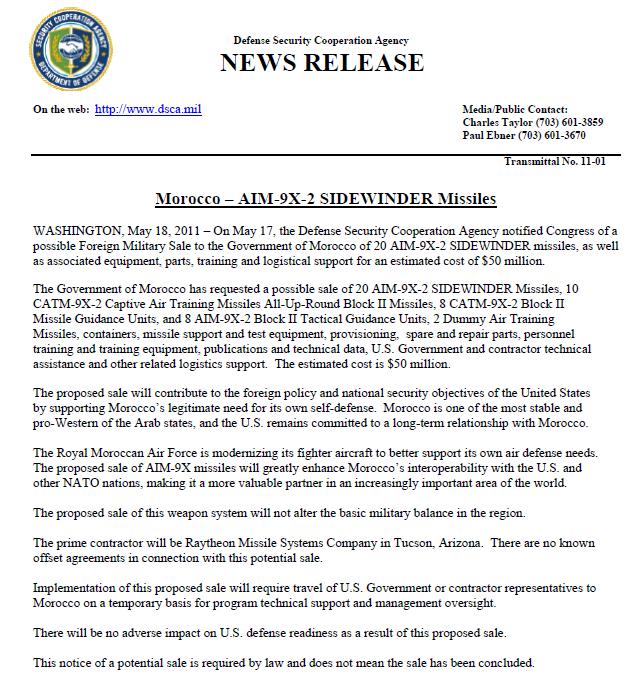
On May 17, 2011, the U.S. Defense Security Cooperation Agency (DSCA) advised congress on a possible foreign military sale (FMS) estimated at about 50 million U.S. dollars to Morocco. In a continuous effort to revamp its air force inventory, Morocco had submitted a military procurement order to the U.S. government for 20 AIM-9X-2 Sidewinder Block II Missiles; in addition to the Sidewinders, the package will include 10 CATM-9X-2 block II missiles, 8 CATM-9X-2 Block II Missile Guidance Units, eight AIM-9X-2 Block II Tactical Guidance Units, two Dummy Air Training Missiles, containers, missile support and test equipment. The missiles will be delivered All-Up-Round (AUR) by Raytheon’s Missile Systems branch in Tucson, AZ.
The AIM-9 missile is a supersonic, launch and leave air-to-air missile that uses passive infrared energy (heat) for the acquisition and tracking of targets. It will be mounted on the 24 F-16 Block 52+ fighter jets Morocco purchased from Lockheed Martin for 2.4 billion U.S. dollars. This missile is used for self-defense purposes in dogfights – close range air combat situation not exceeding 20 kilometers. It features an imaging infrared focal plane array (FPA) seeker with claimed 90° off-boresight capability and a new three-dimensional thrust-vectoring control (TVC) system providing increased turn capability over traditional control surfaces. Combined with the Joint Helmet Mounted Cueing System, AIM-9X-2 delivers combined kill ratios exceeding 50:1 against non high-off-boresight equipped fighters; the pilot can lock-on a target by having eyes on it giving him first shot first kill dominance. The missile is highly popular and the U.S. congress authorized its sale to over forty countries.
In conjunction with Morocco’s previous defense procurements such as the 24 F-16 Block 52+ fighter jets, and the DB-110 airborne reconnaissance system from Goodrich Corporation, the AIM-9X-2 Sidewinder Block II missiles will enhance the high-impact capability of Morocco’s Royal Air Force and improve the country’s interoperability with U.S. and NATO militaries.
The DSCA, in its report to congress, indicated that the sale will not affect the balance of power in the region and justified it as “supporting Morocco’s legitimate need for its own self-defense.” From what, or whom? Might you ask. Certainly not Al-Qaeda in the Islamic Maghreb (AQIM) which government officials consider to be the biggest threat facing Morocco today. Analysts agree that Morocco and Algeria will not engage in open conventional warfare; Neither NATO nor the U.S. will allow two of their key partners in the war against terrorism to offset regional stability allowing AQIM to gain a strategic advantage.
Morocco has many enemies, but none against whom it will engage in a declared and conventionally weaponized skirmish. The Royal Armed Forces participation in joint and combined war games such as Phoenix Express and African Lion with European and U.S. militaries, its billions of dollars in military procurements, at a time when the national budget deficit rose by more than 20 percent to 6.3 billion dirhams and the state is struggling to keep its 2011 budget deficit at its targeted 3.5 percent, aims at keeping NATO and the U.S. committed to supporting its regime. More than any military hardware, Morocco’s military engagement is its strongest defense. It didn’t work quite well for Hosni Mubarak, but the Moroccan government is hoping for the best.
A. T. B. © 2011
Moroccan officers visit McEntire to learn about F-16s
Special to South Carolina Military News April 22, 2011
MCENTIRE JOINT NATIONAL GUARD BASE – The South Carolina Air National Guard recently hosted members of the Moroccan Air Force during a week-long visit this month.
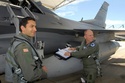
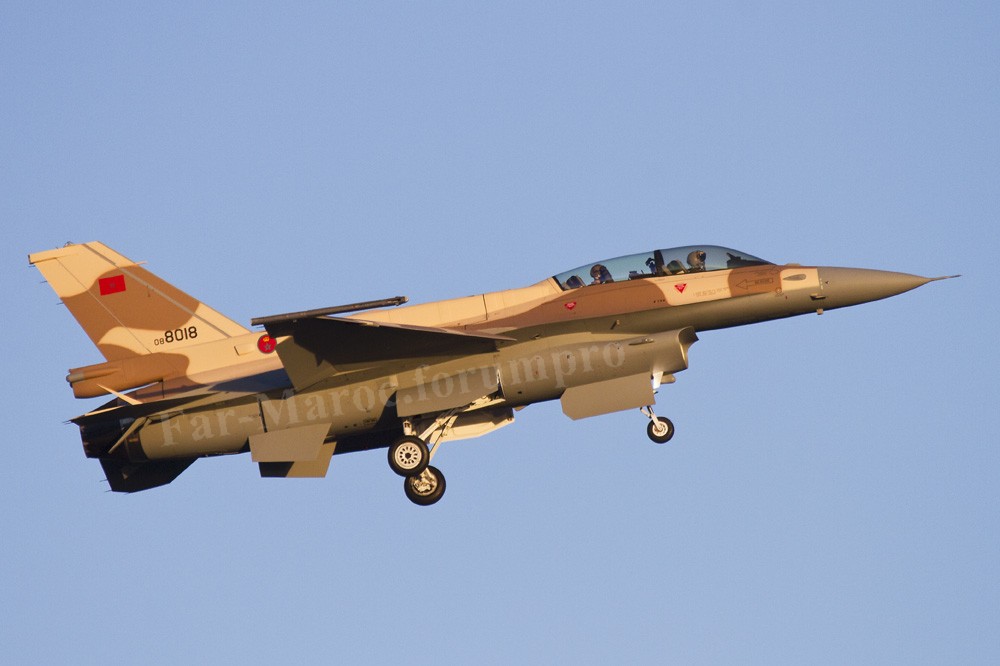
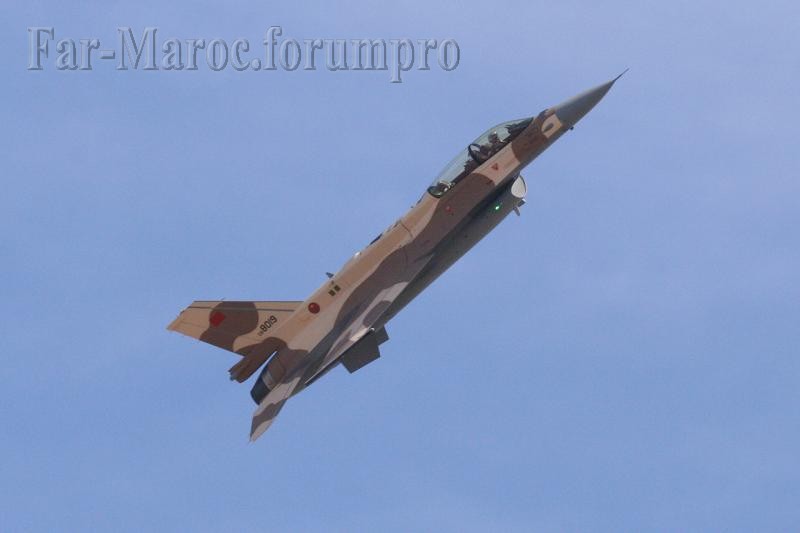
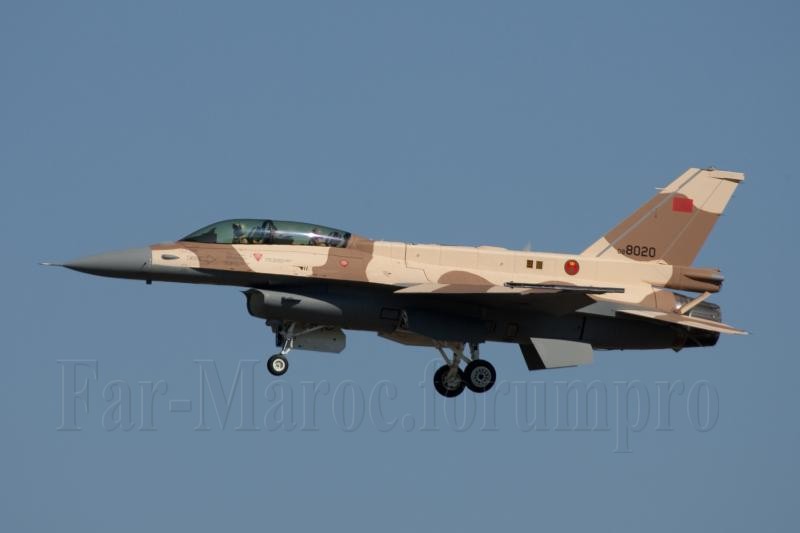
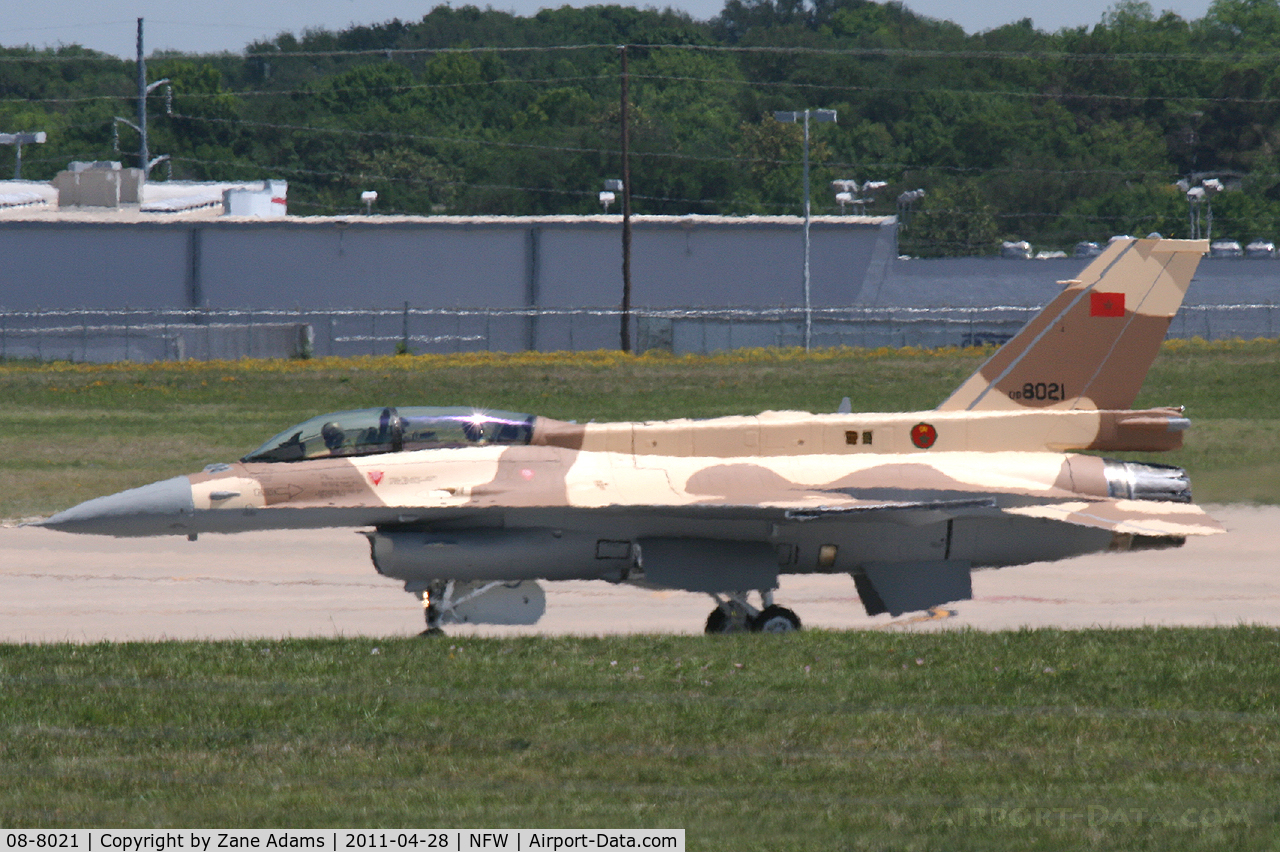
The Moroccans visited the base because they are scheduled to receive Block 52 F-16s similar to the ones flown by the S.C. Air Guard. The visiting officers benefited from a closer look at associated maintenance, operations and safety programs.
The trip to McEntire was facilitated by the Utah National Guard, with which the Moroccans have a “State Partnership.”
The South Carolina extension of that partnership began in January 2010 when the Utah Air National Guard refueled two SCANG F-16s en route to an air show in Marrakech, Morocco.
Later that year, two Moroccan Air Force officers visited McEntire to get a first-hand look at the SCANG’s operations and ongoing construction projects and to check out operations at nearby Shaw Air Force Base.
Brig. Gen. Scott Williams, commander for the 169th Fighter Wing, said: “We’ve appreciated the opportunity to facilitate this historic transition for our new friends in Morocco. Though these visits were intended primarily to share our expertise, both units benefit from the exchange of information and insights.”
In addition to similar missions, McEntire and the base at which the Moroccan F-16s will be stationed share similar operating budgets and physical aspects. Col. Maj. Cheikh Boutahar said, “With the help of McEntire and their experience, we will succeed.” He summarized the recent visit as an opportunity to examine the base’s various training programs and day-to-day maintenance activities.
Capt. Fassi Fehri, left, a pilot from the Moroccan Air Force, receives a F-16 orientation flight, from Lt. Col. Scott Lambe, commander of the 169th Operations Support Flight at McEntire Joint National Guard Base. The Moroccan Air Force has recently purchased F-16 Block 52 aircraft. He is an accomplished pilot and will become his country's first F-16 fighter pilot. Through the State Partnership program with the Utah Air National Guard, the 169th Fighter Wing from the South Carolina Air National Guard has agreed to assist the Moroccan Air Force with their transition to F-16 fighter operations. (S.C. Air National Guard photos by Sr. Master Sgt. Edward E. Snyder)
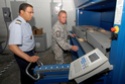
Lt. Col. Rachid Oubad, a maintenance officer from the Moroccan Air Force, receives instruction on Weapons Systems Maintenance by Sr. Master Sgt. Daniel Shelley, from the 169th Maintenance Squadron.[/center]

Ignacio -ESP- escribió:Alguien sabe cuáles son los numerales de los F-5's y Mirages abatidos y destruídos? Según el anterior documento dice que hasta 1991 se contaban 13 bajas entre los Mirage, 7 derribados por el Polisario y otros 6 perdidos por diversas causas. En cuanto a los F-5 no sé el número, pero hay fotos de f-5's derribados... ¿Hay algún registro, o algo parecido?



 شكرا جزيلا llevaba buscando algo parecido años... Y dice lo mismo... 13 Mirages, 7 F-5, 2 Broncos y 2 C130??

 Que wapo ¿Pero qué hace en Bélgica?. Pensé que en Bélgica sólo entrenaban con los f16. ¿Y por qué lo de la prueba de vuelo? Que les han metido ya la revisión ASTRAC?
Ignacio -ESP- escribió::shock: شكرا جزيلا llevaba buscando algo parecido años... Y dice lo mismo... 13 Mirages, 7 F-5, 2 Broncos y 2 C130??
Habrá que cambiar la táctica, y buscar fotos hechas después de 1995...
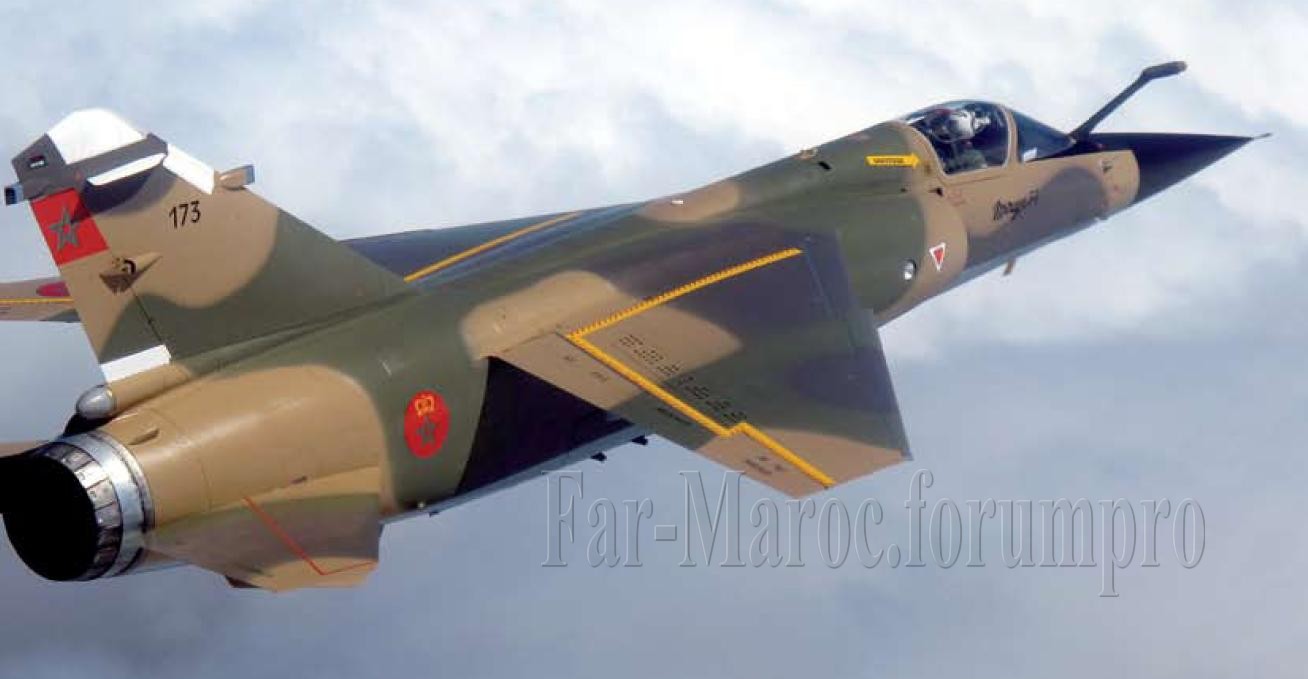
Y el 173
Ya los he cambiado, el 146 el 173 ! Gracias !!
Y otras cosillas... que se me han ocurrido viendo las fotos; A ver, en los F16 del 1-17 son monoplazas y 8 biplazas??... en España me parece que hay 5 de entrenamiento por cada 30 de combate.. es decir 1 por cada 6 aviones... y Marruecos 1 por cada 2..., Esto quiere decir que tiene pensado adquirir más?, por ejemplo hasta 40, para tener 32 de combate, y tener 1 por cada 4..., o es que no van a comprar ninguno de entrenamiento, o no tantos??
Otra cosuca, el último Mirage es el 58?
Y por último en la 5º BAFRA, cómo es:
Escuadron SABBRA
- Escuadrilla Assad - Defensa Aérea - Mirage F1-CH
- Escuadrilla Atlas - Ataque a tierra - Mirage F1-Eh.200
- Escuadrilla Iguider - Reconocimiento - EH?
o la SABRA también es una ala de combate??
Ah y muy buenas las fotos de las SIGMA, sobretodo la de las 2 Sigmas juntas !!
Un Saludo


PICTURES: Lockheed Martin readies first Moroccan F-16 for delivery
By Craig Hoyle
Lockheed Martin is close to delivering its first F-16 fighter to Morocco, with the aircraft having recently entered flight testing in the USA.
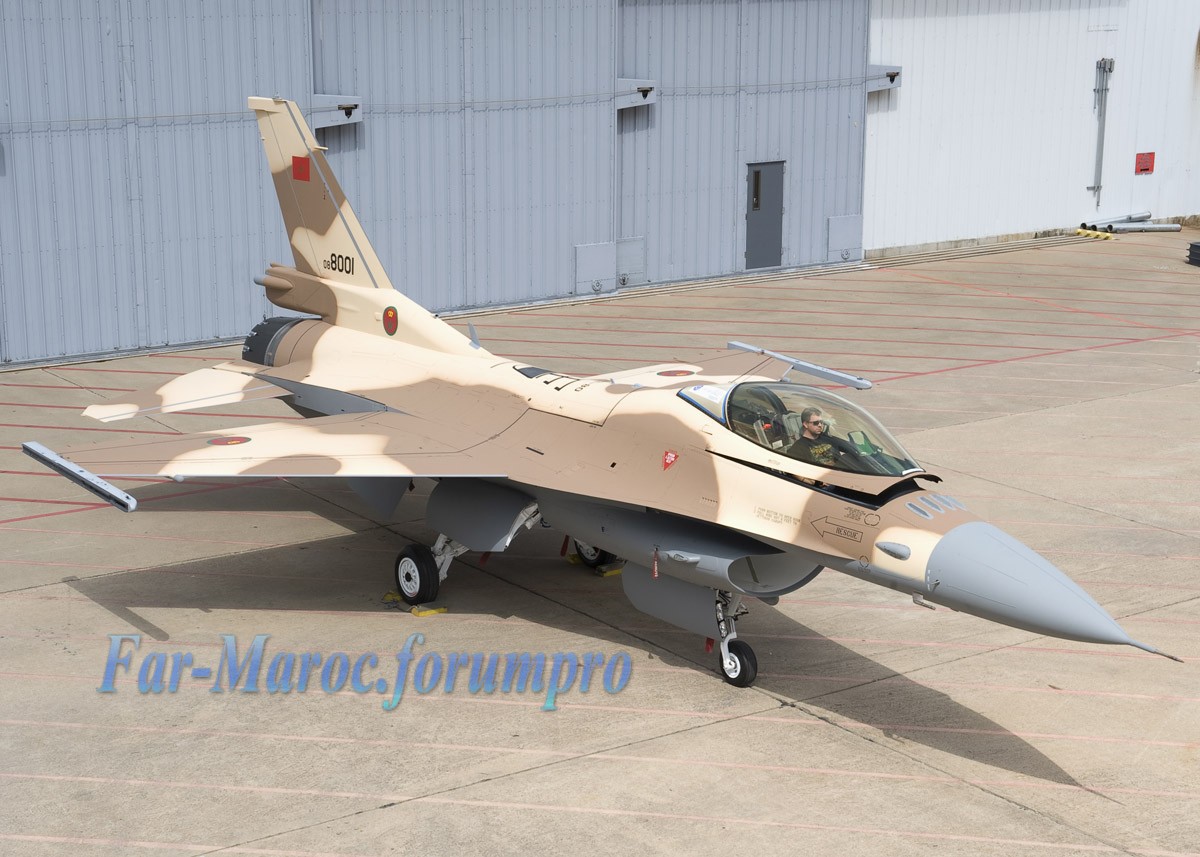
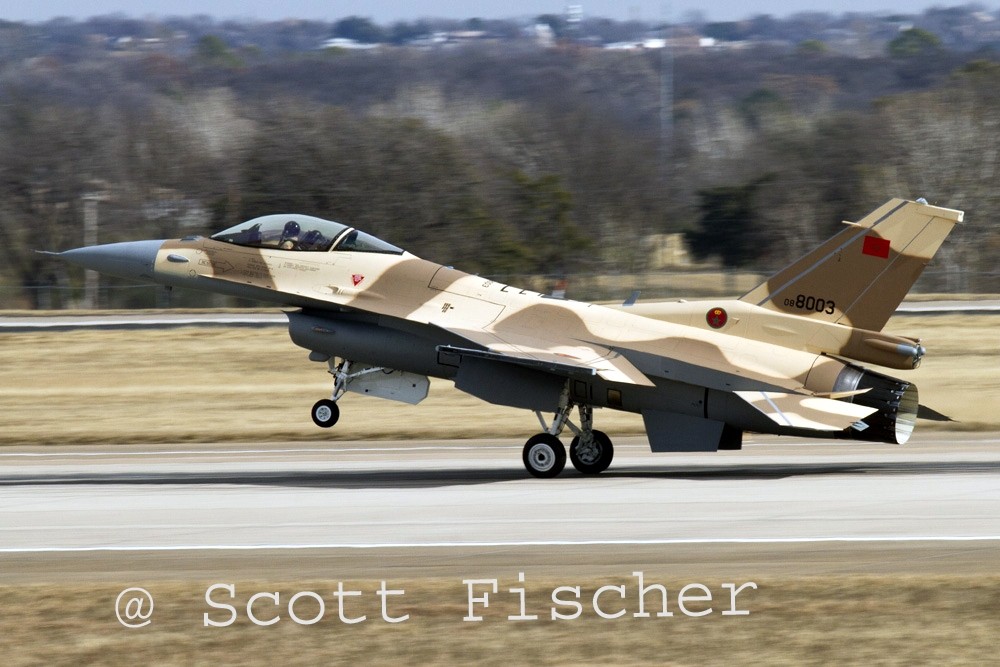
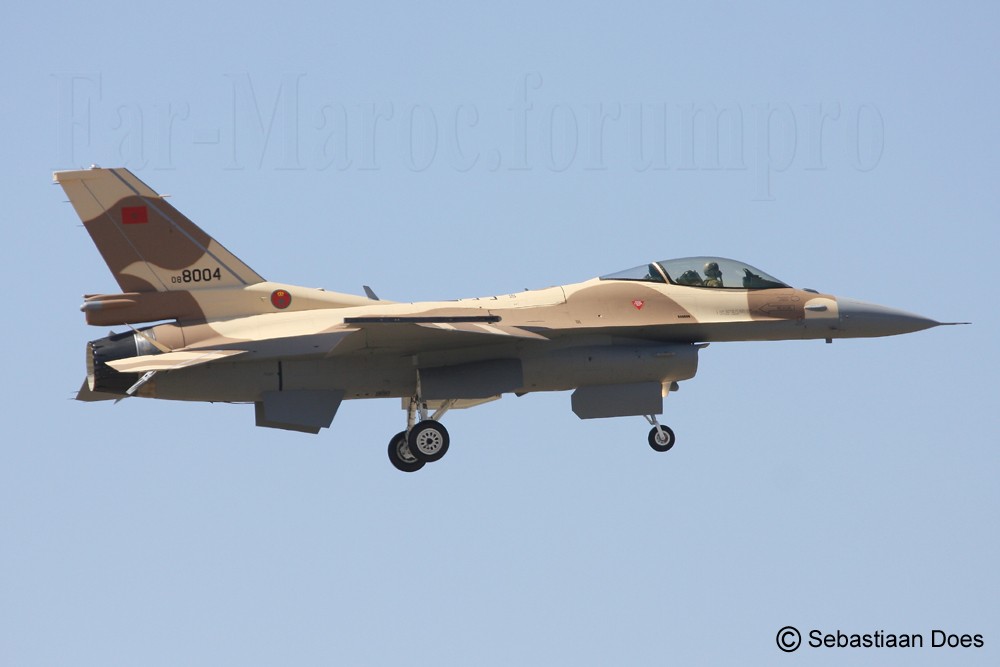
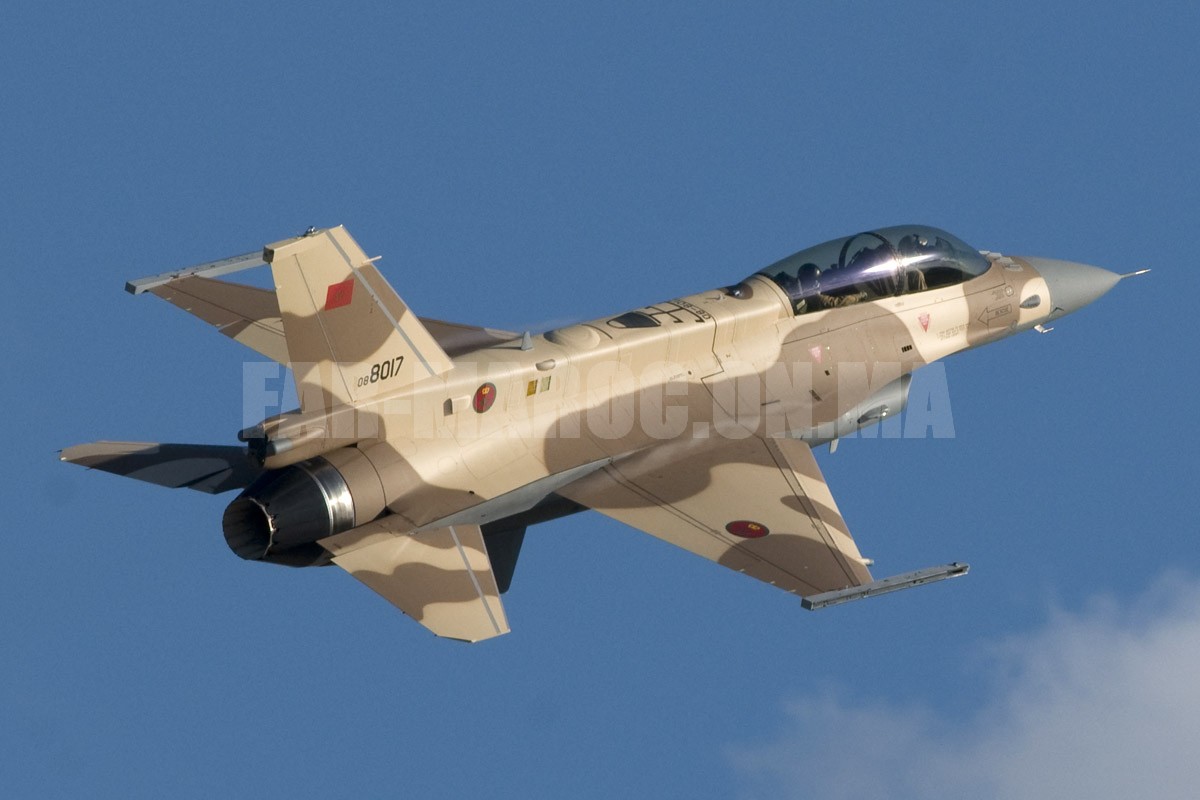
Flown from Lockheed's Fort Worth site in Texas already sporting its Moroccan markings and carrying the registration 80001, the aircraft is the first of 18 single-seat Block 52 F-16Cs on order for the nation's air force. It also will receive six D-model trainers under a contract signed in December 2009.
Morocco's F-16s will be powered by Pratt & Whitney F100-229 turbofan engines. The nation has requested a possible $50 million purchase of Raytheon AIM-9X Sidewinder air-to-air missiles to equip the type, the US Defense Security Cooperation Agency announced in mid-May. It also has previously sought to purchase AGM-65 Maverick air-to-surface missiles and Paveway II precision-guided bomb kits from the same supplier.
The Royal Moroccan Air Force is also in the process of fielding 24 T-6C basic trainers from Hawker Beechcraft. The company announced in May that it has already reached the half-way point in handing over the aircraft.


Usuarios navegando por este Foro: Bing [Bot], ClaudeBot [Bot], Google [Bot] y 10 invitados